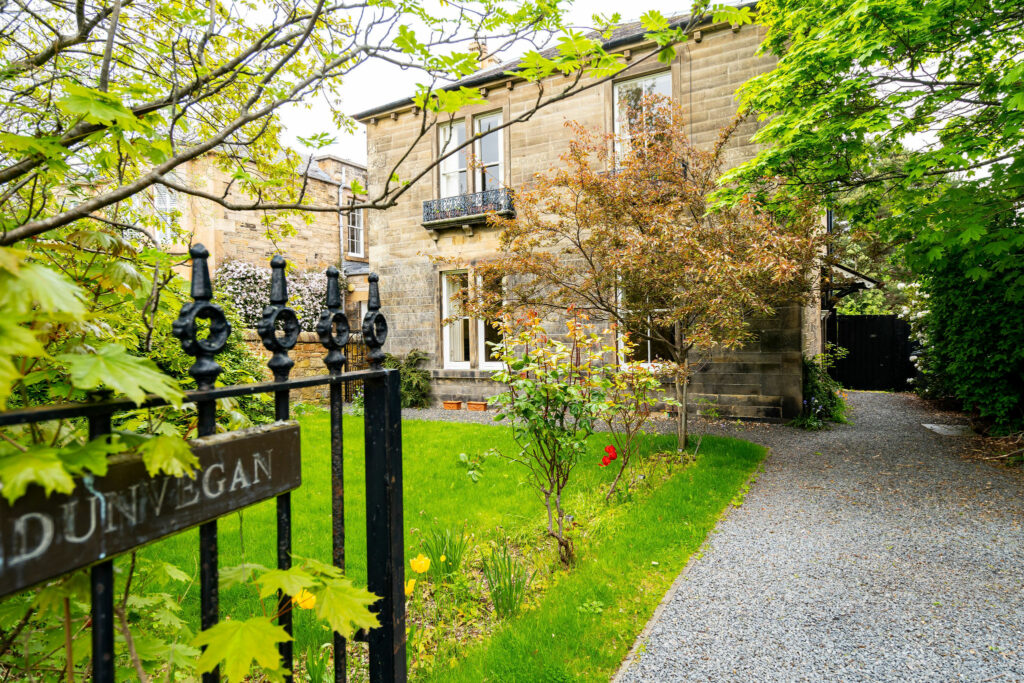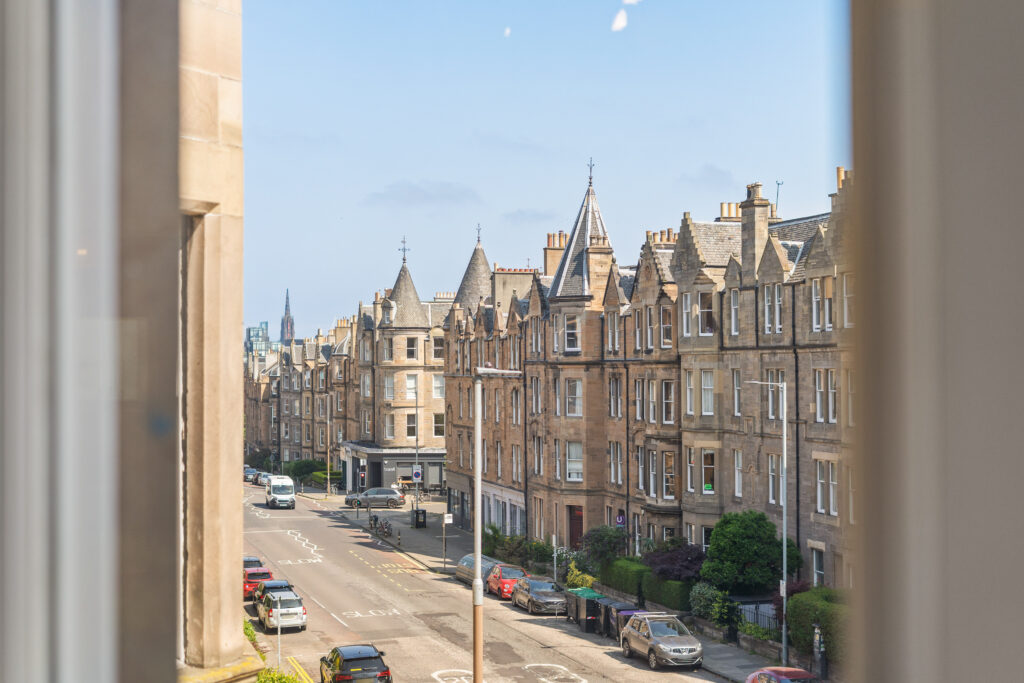
If you’re thinking about selling your Edinburgh home, one question usually comes before all the others:
What is it actually worth?
It sounds like it should have a straightforward answer. After all, you can look at properties for sale nearby, check recent sold prices and find out what similar homes have achieved.
But property values aren’t quite that simple.
Two homes on the same street can look very similar on paper and still attract very different prices. One might have a beautiful south-facing garden. Another might have original period features. One may have been lovingly renovated, while the other needs a little work.
And then there is the market itself.
What buyers are looking for changes. The number of competing properties changes. Demand varies from one part of Edinburgh to another.
So when we value a property at MacWood, we’re not simply looking at a number.
We’re looking at the property, the location, the market and the people who are likely to want to buy it.
The latest Edinburgh figures show that the market remains active. Between June and August 2026, the average property sold for £317,070, while homes took a median of 21 days to go under offer and achieved an average of 102.6% of their Home Report valuation.
But averages only tell you so much.
Here are seven things we think really matter when working out what an Edinburgh home is worth.
We all know that location matters.
But when it comes to property, “Edinburgh” isn’t a location precise enough.
A home in Stockbridge is different from one in Marchmont. A property in Morningside has a different appeal from one in Leith. A quiet street in Trinity offers something different from a city-centre apartment.
And even within the same neighbourhood, one street can be more sought-after than another.
Perhaps you’re close to a park, a great local school or a favourite café. Maybe the property is tucked away from traffic. Perhaps there’s an open outlook or you’re within easy walking distance of the city centre.
These details can make a real difference.
That’s why local knowledge matters when valuing a property.
We’re not just looking at an area on a map. We’re thinking about what makes that particular location desirable to the people who are likely to buy there.

Floor area and bedroom numbers are important, but they don’t tell the whole story.
A well-designed two-bedroom flat can feel much more spacious and appealing than a larger property with an awkward layout.
Buyers notice things like natural light, proportions, flow between rooms and how easy the home feels to live in.
They also think about what the property could become.
Could the spare room work as a home office? Is there space for a dining table? Could the kitchen be opened up? Is there useful storage?
The best properties often give buyers that feeling of “I could see myself living here.”
That feeling is difficult to put into a spreadsheet, but it’s an important part of how buyers make decisions.
One of the questions we’re often asked is whether a homeowner should renovate before selling.
Our answer is usually: it depends.
There are times when a little preparation can make a big difference.
A fresh coat of paint. Tidying the garden. Fixing a sticking door. Replacing a tired light fitting. Clearing some of the clutter that’s accumulated over the years.
But that doesn’t necessarily mean installing a brand-new kitchen or completely renovating the bathroom.
Buyers have different tastes, and many would rather buy a well-maintained home and make their own changes over time.
The important thing is to understand which improvements are likely to help and which may simply cost you money without adding the same amount to the value.
That’s one of the conversations worth having before you put your home on the market.
Some of the most valuable features of a property aren’t things you can add later.
A wonderful outlook.
A south-facing garden.
High ceilings.
Original fireplaces.
A beautiful period staircase.
Private parking.
A quiet street.
Being a short walk from the places you love.
These are the things that can make one property stand out from another.
Edinburgh has an enormous amount of architectural character, and buyers are often drawn to homes that retain something of the city’s history.
If your property has a feature that makes you smile every time you walk through the door, there’s a good chance a buyer might feel the same.
A garden or balcony isn’t essential for everyone, but for many buyers it can be a significant attraction.
It doesn’t have to be enormous.
A small courtyard in the heart of Edinburgh can be every bit as appealing as a large suburban garden if it provides somewhere to sit, relax or entertain.
The same applies to balconies and roof terraces.
If you have outdoor space, make sure you’re showing it properly.
A tidy garden, a clean patio and somewhere to sit can help buyers understand what they could do with it.
And if the garden gets the evening sun, or has a particularly lovely view, that’s something worth talking about.
Your property’s value isn’t determined in isolation.
When you sell, you’re competing – in a perfectly normal sense – with the other homes that buyers could choose instead.
If there are several similar properties available, buyers have more choice.
If very few comparable homes are coming to market, a well-presented property can attract considerable attention.
This is one reason a valuation from someone who is actively working in the local market can be useful.
We can look beyond historic sales and consider what buyers are doing right now.
The latest Edinburgh figures show that while prices remain resilient, sales volumes have softened compared with the previous year and fewer properties have gone to a closing date.
That doesn’t mean buyers have disappeared.
It means that sellers need to understand the market they’re entering.
Finally, there’s the way your home is presented.
A property can be wonderful in person but fail to make an impression online.
And these days, the first viewing often happens on a phone.
Photography, the property description, floorplans and the overall marketing all need to work together.
But good marketing isn’t about making a property look like something it isn’t.
It’s about showing the right people why they should come and see it.
Perhaps it’s the period features.
Perhaps it’s the garden.
Perhaps it’s the location.
Perhaps it’s the light, the views or the feeling of space.
Our job is to find those things and make sure they’re seen.
The honest answer is that you can’t always find out from an online calculator.
Those tools can be useful for getting a very broad idea, but they don’t know that your flat has a wonderful open outlook.
They don’t know that your garden catches the afternoon sun.
They don’t know that you’ve retained beautiful original features.
And they don’t know that the property next door – which looks similar on paper – has a completely different layout.
That’s where experience comes in.
A proper valuation considers recent comparable sales, current demand, competing properties, the condition of your home and all the little things that make it different.
There’s another point worth making.
When you’re selling your home, it can be tempting to choose the agent who gives you the highest valuation.
After all, who wouldn’t want their home to be worth more?
But a valuation isn’t a promise.
The figure needs to be supported by the market.
A property priced too ambitiously can sit on the market while buyers wait for the price to change – a more frequent occurrence in the current climate. A property that’s positioned correctly from the beginning can generate interest from people who are genuinely in a position to buy.
The aim should therefore be a realistic strategy, not simply the biggest number.
At MacWood, we’d rather have an honest conversation with you at the beginning than tell you what we think you want to hear.
Because ultimately, what matters isn’t what someone says your home is worth.
It’s what a buyer is prepared to pay for it.
You don’t need to be ready to put your property on the market tomorrow.
Sometimes the best time to have a conversation is when you’re still thinking about your options.
Perhaps you’re wondering whether to sell now or wait. Maybe you’re considering moving but don’t know what your current home is worth. Or perhaps you simply want to understand what the next step might look like.
We’re happy to talk it through.
At MacWood Properties, we combine local Edinburgh knowledge with a straightforward approach to selling homes.
We’ll look at your property properly, talk honestly about what we think it could achieve and explain how we’d approach bringing it to market.
If you’re thinking about selling, we’d love to hear from you.
Get in touch with MacWood to arrange a valuation and find out what your Edinburgh property could be worth in today’s market.

Whether you’re buying or selling, understanding the market is the first step – and we’re here to help.
👉 Request your free property valuation
👉 Get expert guidance on buying or selling
👉 Stay ahead with local market insight
Call: 0131 510 5839
Email: hello@macwoodproperties.com